Hello Bar -01

Turn insights into field execution with Botree AI

Distribution Management System

Boost Sales Growth by Accurately Tracking Your Target Vs Achievements Tracking

Botree Target vs Achievements-banner
Priyanka

Priyanka Allu

Senior Specialist - Content Marketing
Share:FacebookX (Twitter)LinkedInWhatsApp

In the fast-moving consumer goods (FMCG) industry, accurately tracking sales performance is crucial for making informed business decisions. One of the key strategies to boost sales is by setting clear sales targets with attractive incentives to motivate sales representatives. Sales target achievements are often calculated based on order data or invoice data. While both methods are widely used by leading consumer packaged goods (CPG) companies, tracking sales achievements against actual sales or invoice data has been identified as a more accurate and reliable measure.

What is Actual Sales?

A sale is considered complete only after the successful delivery of the product ordered by a customer.

This blog highlights the benefits of tracking sales achievements against invoice data and explains why invoice data is preferred over order data in the FMCG industry. But before diving into the advantages, let’s first understand the difference between order data and invoice data.
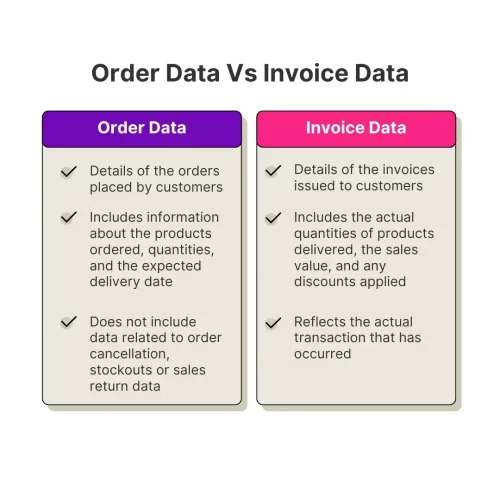
Understanding Order Data vs. Invoice Data

Minimalist Ebook versus Paperback Comparison Instagram

Now that we understand the difference between order data and invoice data, let’s explore how sales achievements are calculated based on each method using a real-world example.

So, what happens when you track sales achievement against order data?

Imagine this: You set ambitious sales goals for your FMCG (Fast-Moving Consumer Goods) company. Your sales reps hustle, placing big orders for your products. You celebrate their achievements and pay out incentives. Feels good, right?

But then reality hits. Orders get canceled, distributors run out of stock, and products never reach the shelves. Suddenly, those impressive sales figures seem a little…fuzzy.

Here’s the problem: Your sales achievement data against the order data does not account for cancellations and unfulfilled orders due to logistical challenges or other issues, leading to inaccuracies in sales reporting.

This can result in;

  1. Misguided Business Strategies and Poor Inventory Management: Inaccurate sales data gives a false view of demand. Based on order data, you ramp up production. But weeks later, warehouses are bursting with unsold inventory because orders were canceled or unfulfilled. This leads to lost sales from stockouts and wasted storage space for unsold items.
  2. Financial Discrepancies: Companies often reward top sales reps based on sales data. If the data is inaccurate, you might be rewarding sales reps for orders that never materialized, wasting valuable incentives.
  3. Poor Retailer Experiences: If your retailers frequently face issues like unfulfilled orders or significant discrepancies between what they order and what they receive, it can lead to dissatisfaction, damaging the company’s reputation.

What’s the solution?

Read on to understand why we recommend tracking sales achievements against invoice data.

5 Reasons Why Calculating Sales Achievement Against Invoice Data is Important Over Order Data in FMCG

By using invoice data, the company can accurately track the products that were delivered and accepted by the retailers. This provides a true measure of sales achievement, helping the company to plan its production, manage inventory, and forecast demand more effectively.

  1. Accuracy in Sales Reporting: Invoice data provides an accurate representation of what has been sold and delivered. It eliminates the discrepancies that arise from unfulfilled orders, cancellations, and modifications. This ensures that the sales figures are precise and reliable.
  2. Better Inventory Management: Accurate sales data from invoices enables businesses to manage their inventory more effectively. By tracking actual sales, you gain valuable insights into what’s selling and adjust production accordingly. This minimizes stockouts for popular items and prevents overstock on slow-moving ones.
  3. Effectively Track Sales Performance: Sales incentives are a powerful motivator in the FMCG industry. However, relying on order data for incentive calculations can lead to skewed results. A salesperson might secure a large order, but if it gets canceled later, they’ve been rewarded for a sale that never materialized. Invoice data ensures fair play. Sales reps are recognized and rewarded based on actual sales performance, boosting morale and fostering a culture of achievement.
  4. Enhanced Financial Analysis: By tracking invoice data, you can incentivize your sales team based on actual sales, avoiding losses from unconverted orders. Accurate data allows for strategic financial planning, reducing unnecessary production costs. Invoice data, including discounts, taxes, and payment terms, helps analyze product profitability and make informed pricing decisions. Additionally, you can identify competitor discount trends and adjust your pricing strategy accordingly.
  5. Improved Customer Satisfaction: Consistency is key in the FMCG world. When retailers consistently receive the products they order, it builds trust and strengthens your relationship. Order data can lead to discrepancies between what’s ordered and what’s delivered, causing frustration for retailers. Invoice data ensures accurate deliveries, fostering stronger partnerships with your retail network.

Conclusion

In the fast-paced FMCG industry, accurate sales data is the difference between success and missed opportunities. Ditch the order data mirage and embrace the power of invoices. Gain valuable insights, optimize operations, and make data-driven decisions that fuel sustainable growth.

Implement invoice-based sales tracking today and watch your FMCG business soar!

About the Author

Priyanka

Priyanka

Senior Specialist - Content Marketing

Meet Priyanka Allu, our in-house content marketing specialist. With a background in literature and communications, Priyanka brings in her expertise in crafting compelling brand narratives and engaging content across various marketing channels. Outside of work, you can find her quickly escaping from the mundane city life by the beach or mountains, spending quality time with loved ones.
Related Blogs

How to Drive Higher Order Fulfillment Rates in Distribution Networks
Distribution Management System
How to Drive Higher Order Fulfillment Rates in Distribution Networks

When it comes to FMCG distribution, any delivery delay or error means reduced product availability, customer

Distributor Management System vs Distribution Management System: Features, Benefits, and Differences
Distribution Management System
Distributor Management System vs Distribution Management System: Features, Benefits, and Differences

The FMCG, CPG, and OTC Pharma industry is experiencing a major shift. Distribution today is faster,

Why Retail Supply Chain Visibility Is Critical for Modern Distribution
Distribution Management System
Why Retail Supply Chain Visibility Is Critical for Modern Distribution

Modern retail supply chains always remain under immense pressure to provide the right goods at the

Distribution Channel Strategy for Stronger Market Reach and Revenue Growth
Distribution Management System
Distribution Channel Strategy for Stronger Market Reach and Revenue Growth

Having a great product is just one way to succeed in today’s highly competitive business environment.

eB2B in FMCG: How to Grow Retailer Orders Beyond Field Visits
Distribution Management System
eB2B in FMCG: How to Grow Retailer Orders Beyond Field Visits

Retailers are now expecting the same convenience when purchasing their goods B2B as consumers have when

Demand Forecasting in FMCG: How to Improve Inventory Planning, Product Availability, and Sales Growth
Distribution Management System
Demand Forecasting in FMCG: How to Improve Inventory Planning, Product Availability, and Sales Growth

Every FMCG brand has been through both sides of forecasting gone awry. The festive season when