
Botree DMS
Streamline distribution and boost primary sales efficiency.

Botree FlexiDMS
Access secondary data seamlessly without daily disruption.

Botree MyDMS
Empower distributors and accelerate rurban market growth.

Botree SFA
Boost sales productivity and ensure in-store excellence.

Botree Retailer App
Enhance retailer engagement with modern mobile app.

Botree AI
Make smarter decisions with granular insightful dashboards.

Christina Evangelin Ebinezer
Marketing AssociateUpdated on August 20, 2026



How field sales teams conduct themselves has shifted significantly over the past decade.
It wasn’t uncommon just a few years ago for FMCG and CPG sales representatives to maintain an order book on paper, use spreadsheets, call customers, and report back each day.
However, this is no longer enough for modern sales teams which are expected to serve a higher number of clients, conduct more promotional activities, gather more valuable insights about consumer behavior, and respond quickly to changes. It takes more to do so than traditional techniques.
This is where field sales automation becomes relevant. Field sales automation is a practice aimed at making it easier for businesses to streamline field operations with the help of automation and gain full visibility into execution efforts in addition to equipping sales professionals with the right tools. With the advent of AI, field sales automation transforms from a system of record into a system of intelligence.
In this article, you will find out what field sales automation entails, how it has evolved over the course of time, its capabilities, and the impact AI is having on field sales in 2026.
Field sales automation (FSA) refers to the application of mobile technology, data analytics, and artificial intelligence in making it easy for field sales personnel to plan, conduct, and report on their day-to-day business, which includes visit planning and order taking, scheme reporting, and performance analysis.
While it is associated with or considered similar to SFA or CRM, it is different from them. For one, traditional SFA focuses on the management of the sales pipeline and opportunities for inside sales or large enterprise deals. However, field sales automation focuses on the real world, where the salesperson are tasked with visiting dozens or even hundreds of stores in their territories, working with retailers, conducting trade schemes, and getting products into the right spot on the shelf.
The gap between a manual field sales operation and an automated one isn’t just about speed – it’s a fundamentally different operating model. Here’s what that difference looks like across every critical dimension.
| Dimension | Manual Field Sales | Intelligent Field Sales |
|---|---|---|
| Beat Planning | Manager creates static weekly routes on paper or spreadsheets | Dynamic, AI-optimized routes generated based on outlet priority, location, and business objectives |
| Order Capture | Phone calls, WhatsApp messages, or paper order forms | Digital order booking with live product catalogs, inventory visibility, and automated workflows |
| Scheme Communication | Explained during meetings; reps rely on memory and printed circulars | In-app scheme alerts, auto-calculated discounts, and AI-powered recommendations at the point of sale |
| Outlet Coverage | Coverage gaps discovered after reports are submitted | Real-time coverage visibility with automated alerts for missed or overdue visits |
| Secondary Sales Visibility | Secondary sales data arrives days or weeks later and is often incomplete | Near real-time secondary sales visibility for faster decision-making and market response |
| Performance Visibility | Weekly or monthly reviews based on historical data | Live KPI dashboards with real-time productivity, coverage, and sales insights |
| Retail Execution | Manual audits and subjective assessments | Digital audits with AI-powered image recognition for planogram and execution compliance |
The cost of not automating is never listed on one single line in the P&L. It hides among many small inefficiencies, which seem too small to question – until you see how it looks to operate in a world-class automated system.
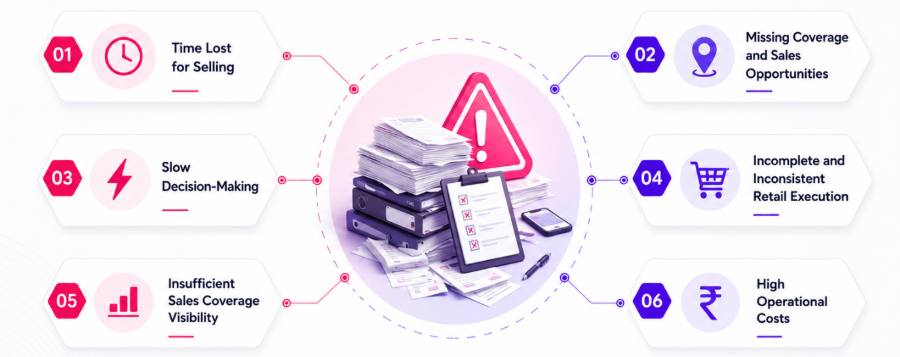
Selling time gets reduced as sales personnel take many hours to compile reports, attend roll calls, plan routes, and enter orders. Many lost minutes and seconds in hundreds of salespeople mean thousands of hours lost per month.
Without real-time visibility, managers find coverage problems once the problem becomes obvious. They may miss out on high-potential accounts that need visiting, new emerging opportunities and let competitors take their share before making any corrective measures.
Managers make decisions based on information available from reports prepared by salespeople. But the gap between real events and awareness about them means delays and missed opportunities for intervention and action.
It’s challenging to ensure promotions, planograms and other merchandising initiatives are being implemented correctly without real-time visibility. It becomes a matter of guesswork and leads to inconsistent results across territories.
Information becomes unavailable and unreliable due to the use of several spreadsheets, messages and other tools used by different departments. It makes decision-making based not on data but on assumptions.
The manual process results in increased administrative burdens for both the sales team and management. This becomes even more expensive as companies grow larger.
McKinsey research on AI-driven automation in consumer goods found that intelligent automation can reduce inventory costs 20–30% and logistics costs 5–20% and those numbers don’t include the productivity gains fro`m better-supported field salesperson.
When evaluating a field sales automation platform, these are the capabilities that distinguish an intelligent system from a digitized clipboard.
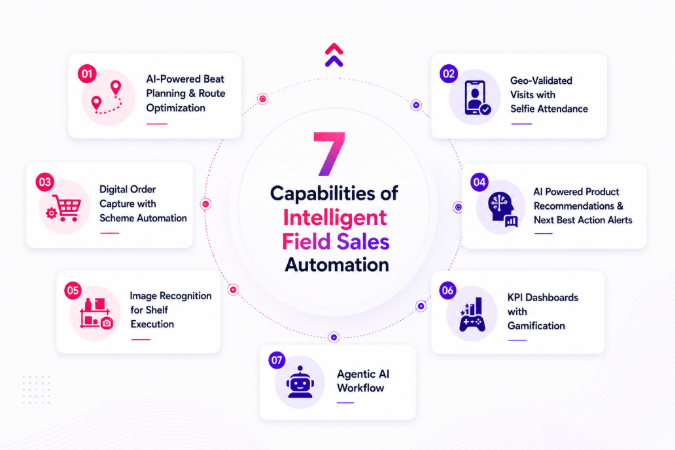
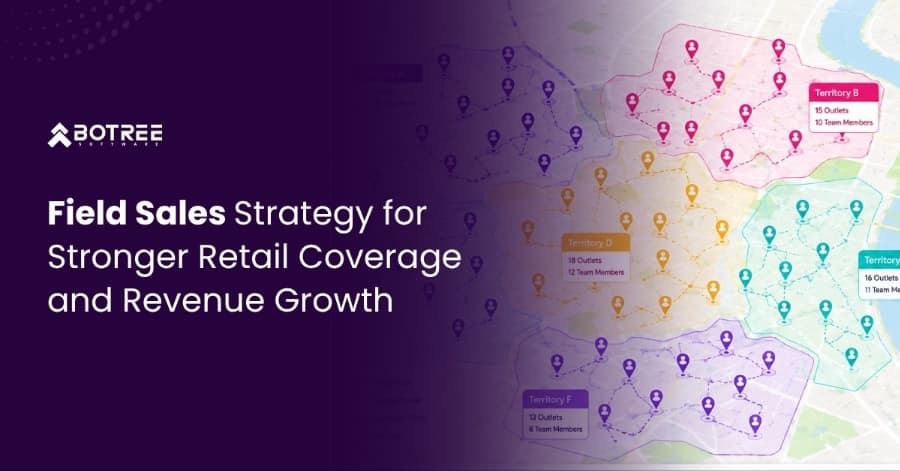
Fixed beats do not consider purchase velocity at the outlets, scheme windows, and geographic concentration. With intelligent beat planning, dynamic optimization of the routes is possible to ensure the maximum number of calls per day.
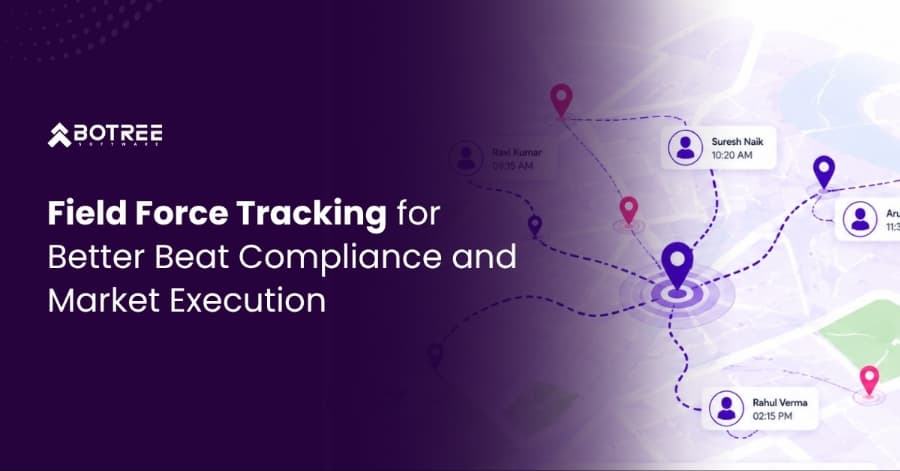
Geographically validated visit records linked to selfie attendance will help managers see an up-to-date map of field visits instead of having a map reconstructed from a day’s end.
Ordering using a mobile application which displays live catalog and inventory with automated scheme calculation gets rid of errors arising from manual calculations, memory, and leaks that occur due to lack of precision in discount applications at an outlet.
This is the point at which automation turns into intelligence. The AI Product Recommender looks at what products have sold well in previous sales conversations to determine the three to four products that have the highest potential to bring incremental sales. It then provides suggestions for up-selling, re-ordering, and deadlines for schemes during these conversations.
In-store images analyzed via computer vision technology can provide insights on planogram execution, share of shelf, and other visibility criteria automatically without requiring the representative to conduct audits and report their findings. Non-conformances are highlighted and scored.
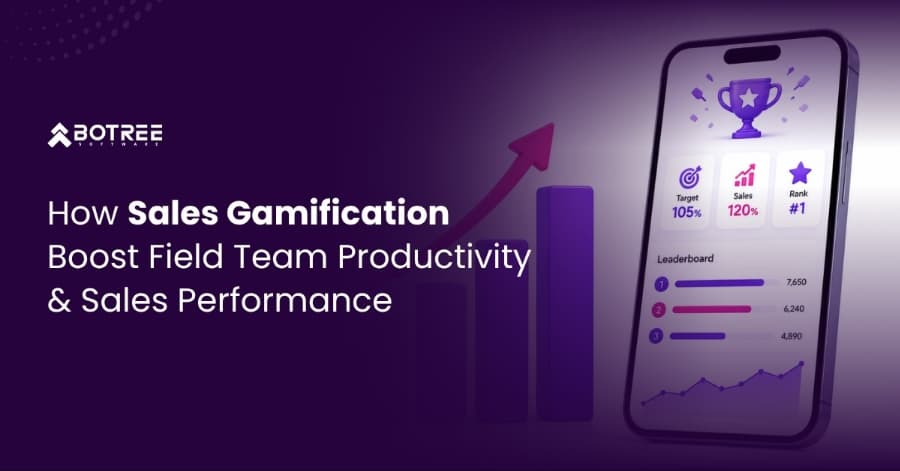
Gamification techniques such as leaderboards, achievement badges, and reward points linked to performance dashboards turn quantitative numbers into performance motivators. Field reps who are able to see their own data perform better than those who receive feedback at monthly intervals.
At the forefront of intelligent FSA: self-driving systems responsible for managing the repetitive aspects of coordination, such as rescheduling a call when routes are closed, sounding off on a scheme renewal when inventory levels reach certain minimums, reassigning the route of an absent representative to other colleagues in the group.
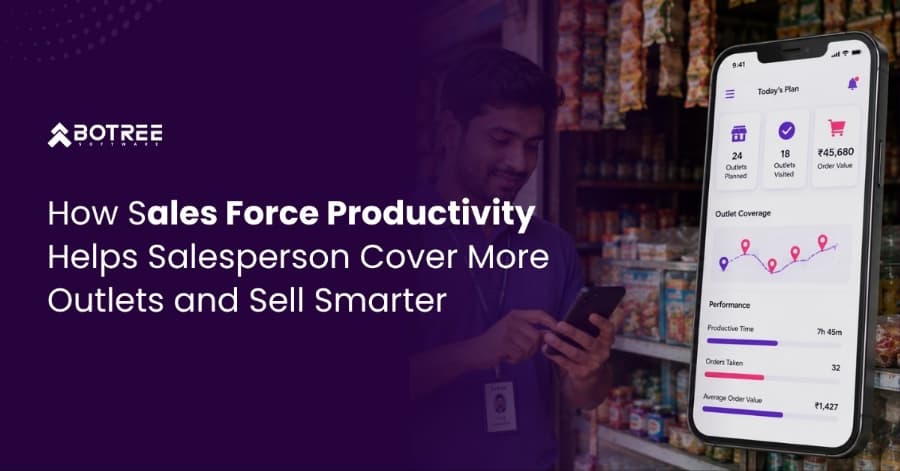
By automating routine activities such as attendance, reporting, route planning, and order capture, sales representatives spend more time selling and less time on administration. Combined with AI-powered beat planning, this helps teams cover more outlets with greater consistency.
Digital audits, image recognition, and real-time compliance tracking help brands improve planogram compliance, on-shelf availability, promotional execution, and overall retail visibility across the market.
Managers gain instant access to field activity, coverage, secondary sales, and performance metrics. Instead of reacting to month-end reports, they can identify issues and opportunities while they are still actionable.
Smarter outlet prioritization, AI-powered product recommendations, and better execution help brands improve sell-through, increase lines per call (LPC), and drive stronger secondary sales growth.
Field sales automation improves productivity, reduces administrative effort, and helps organizations grow without proportionally increasing field headcount. The result is a stronger return on sales investments and a more scalable Route-to-Market operation.
Field sales automation delivers the most value when it removes repetitive work from everyday field execution. These six processes are a strong place to start.
Digitise order capture so salespeople can place orders directly from the outlet, reducing manual entry, errors, and processing delays.
Automatically record attendance, outlet visits, check-ins, and field activity instead of relying on manual updates.
Replace end-of-day spreadsheets and manual reports with automatically updated sales and activity data.
Allow salespeople to submit travel and field expenses digitally, with faster approvals and better visibility for managers.
Capture outlet or distributor stock during visits to improve visibility into availability, stock-outs, and replenishment needs.
Give salespeople and managers real-time visibility into targets, achievements, and gaps throughout the month instead of reviewing performance only at the end.
Rather than relying on mobility or digitization, AI is the game changer for field sales automation, giving sales personnel the capability to make intelligent decisions that facilitate fast response to market opportunities and threats.
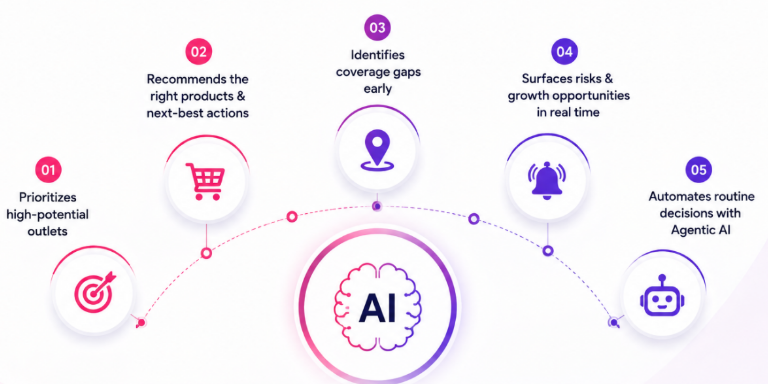
Field sales automation for FMCG, CPG, and consumer durables will be transformed into a system of intelligence by AI.
Modern field sales automation requires more than digitizing field activities. Brands need a connected platform that helps improve coverage, productivity, execution, and decision-making across the sales organization.
Botree SFA platform brings together key field sales capabilities, including:
For FMCG, CPG, Consumer Durables, and OTC Pharma brands, Botree provides the visibility, automation, and intelligence needed to support modern field sales operations.
Field Sales Automation is no longer about replacing paper-based processes by mobile applications. Instead, it is about providing visibility, intelligence, and agility to sales teams to thrive in a highly competitive landscape.
The transition from traditional field sales to intelligent field sales is helping brands operate at a much faster pace, reach out to more outlets, enhance retail execution, and make more informed business decisions throughout the enterprise. As brands integrate more advanced features such as AI into their day-to-day sales operations, field teams will be able to devote more time to growing the business rather than just administrative tasks.
For FMCG, CPG, Consumer Durables, and OTC Pharma brands, the choice is obvious: Intelligent Field Sales Automation can help them enhance productivity, optimize field execution, and create a scalable route-to-market strategy for the future.
Here comes the importance of Botree Software: By integrating all essential solutions such as field sales automation, distribution intelligence, real-time visibility, and AI analytics on one single platform, Botree helps brands evolve their field execution into an intelligent growth engine.
Marketing Associate
Meet Christina Evangelin Ebinezer, our dynamic marketing associate at Botree Software. With a background in HR and marketing, and prior experience as a content writer, Christina brings a sharp eye for storytelling and a knack for crafting engaging blogs and marketing content. She’s passionate about turning ideas into words that drive impact. Outside of work, Christina finds joy behind the piano keys or the wheel—whether she’s playing a soulful tune or cruising down open roads.
What is field sales automation, and how does it differ from traditional sales force automation?
What are the key features to look for in field sales automation software?
How does FMCG field sales automation improve sales productivity?
How do beat planning and route optimization improve field sales performance?
How is AI transforming field sales automation in 2026?
How does field sales automation support retail execution and secondary sales growth?
What ROI can businesses expect from field sales automation?
How do mobile field sales apps help FMCG and CPG sales teams?


Stay updated with the latest trends and insights.